

Microsoft’s strongest stock performance in years helped revive Wall Street after a difficult session, with investors responding positively to signs that the company’s heavy artificial intelligence spending is beginning to generate stronger returns. The rally also lifted major chip companies that had recently faced steep losses.
However, confidence remained mixed as the bond market continued to signal concerns about inflation staying above expectations for a longer period.
Microsoft Leads a Strong Market Rebound
U.S. stocks recovered sharply on Thursday, reversing much of the previous day’s decline. The S&P 500 climbed 1.7%, recovering from its worst session in seven weeks. The Dow Jones Industrial Average gained 613.92 points, or 1.2%, while the Nasdaq Composite jumped 2.8% after suffering a major drop from its recent record high.
The biggest driver behind the market recovery was Microsoft, whose shares surged 15.5%. It marked the company’s best trading day in nearly 18 years after Microsoft reported quarterly profits that exceeded analyst expectations.
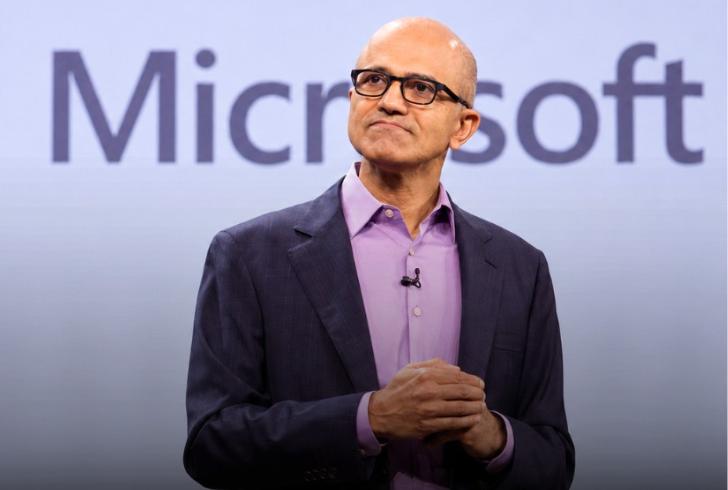
The company’s Azure cloud business showed strong growth, with demand linked closely to artificial intelligence services. CEO Satya Nadella said the results showed that customers are using Microsoft’s technology as they expand their AI operations.
Investors also reacted positively because Microsoft did not announce a major increase in planned AI spending. Many technology companies have increased investments in AI infrastructure, but Wall Street has started questioning whether those expenses will deliver enough revenue growth and productivity gains over time.
AI Spending Concerns Continue Across Big Tech
While Microsoft gained momentum, other technology companies faced pressure from concerns about rising costs. Meta Platforms shares dropped 8% after the company reported weaker-than-expected quarterly profit.
Although Meta’s revenue slightly exceeded forecasts, the company increased the lower end of its expected investment spending range for the year. Investors worried that large AI-related expenses could reduce cash flow if returns take longer to appear.
The market reaction showed the growing divide among technology companies. Businesses investing heavily in AI are receiving strong investor attention, but shareholders are also demanding clearer evidence that these investments can create lasting profits.
Chip Companies Recover After Recent Losses
The recovery extended to companies that produce the processors and memory components needed for AI systems. Many semiconductor stocks had fallen recently as investors questioned whether AI-related valuations had risen too quickly.
Micron Technology gained 18.4%, becoming one of the strongest contributors to the S&P 500’s rise. The increase helped reduce its losses from earlier in the week.
Lam Research also posted a strong gain, rising 18% after reporting better-than-expected revenue and profit results. Advanced Micro Devices climbed 13% as investors returned to major chip companies.
The gains reflected renewed confidence that AI demand could continue supporting companies involved in data centers, processors, and advanced computing equipment.
Bond Market Keeps Focus on Inflation Risks
While stocks improved, the bond market remained cautious. Long-term Treasury yields stayed elevated after rising sharply the previous day following comments from Federal Reserve Chair Kevin Warsh.
The yield on the 10-year Treasury note remained at 4.67%, unchanged from Wednesday. The 30-year Treasury yield increased slightly to 5.22% from 5.20%. These yields influence borrowing costs and reflect investor expectations about inflation and future economic growth.
Warsh said the Federal Reserve remains focused on bringing inflation down to its 2% target. However, the central bank recently decided against raising interest rates despite inflation remaining above that level.
Investors are now watching whether the Federal Reserve will take stronger action if inflation pressures continue or whether financial markets will play a larger role in controlling economic conditions.
According to Seema Shah, investors may question the Federal Reserve’s commitment to fighting inflation if they believe the central bank is depending too heavily on market-driven pressure.
Economic Data Adds More Uncertainty

New economic reports released Thursday showed that U.S. economic growth slowed more than economists expected during the spring. At the same time, inflation remained above the Federal Reserve’s goal, although it improved compared with May.
President Donald Trump, who nominated Warsh for the Federal Reserve position, has supported lower interest rates despite concerns that rate cuts could increase inflation pressure.
Oil prices also moved lower as investors continued watching global supply risks. Brent crude, the international oil benchmark, declined 1.4% to settle at $86.88 per barrel.
Oil prices have experienced major swings due to uncertainty surrounding possible agreements between the United States and Iran that could affect tanker movement from the Middle East.
Global Markets Show Mixed Results
International markets delivered mixed performances on Thursday. In Asia, South Korea’s Kospi index fell 1.2%, while France’s CAC 40 index gained 0.9%.
South Korea’s market has been closely linked to AI trends because of major technology companies such as Samsung Electronics and SK Hynix.
Samsung reported record spring profits and said demand for its chips remains stronger than supply. However, its earnings still fell short of analysts’ high expectations, causing its shares to decline 0.7%.
Microsoft’s powerful stock rally helped restore confidence across Wall Street, especially among technology and semiconductor companies connected to artificial intelligence.
The market response showed that investors are rewarding companies that demonstrate clear financial returns from AI investments. At the same time, inflation concerns remain a major factor for bond investors as they assess future Federal Reserve decisions and economic growth.
The coming months will likely depend on whether AI-driven gains continue and whether inflation moves closer to the central bank’s target.