
Valentine’s Day has always reflected how people feel about money, and this year is no different. Rising prices are reshaping how Americans celebrate, turning what was once a predictable holiday into a clear example of the K-shaped economy.
While some households continue to spend freely, many others are scaling back, choosing simpler plans that fit tighter budgets.
Rising Prices Are Changing the Mood
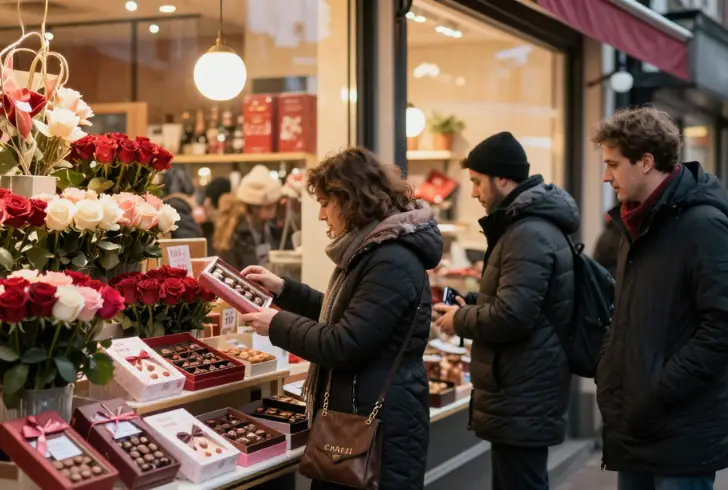
The cost of Valentine’s Day essentials has climbed enough to influence decision-making across income levels. A recent report from Groundwork Collaborative and The Century Foundation, based on January data from NIQ, showed noticeable year-over-year price increases for popular holiday items like roses and chocolates.

Broader inflation data adds context. The consumer price index rose 2.7% year over year in December, well below the 9.1% peak reached in June 2022. Even so, Valentine’s staples rose much faster than overall inflation:
1. Candy and chewing gum prices jumped 10%
2. Indoor plants and flowers increased 7.2%
3. Food away from home rose 4.1%
These increases are enough to turn a dinner reservation or a box of chocolates into a careful financial choice for many households.
A Clear Divide in Spending Power
The uneven recovery is on full display. Higher earners, sitting on the upper arm of the K-shaped economy, continue to feel confident. Strong stock market performance and healthier retirement accounts are giving this group room to spend on luxury gifts, fine jewelry, and high-end dining.
Elizabeth Pancotti, managing director of policy and advocacy at Groundwork Collaborative, noted that this group often looks at rising stock prices and feels optimistic about the economy. That confidence is translating into steady or even increased Valentine’s spending.
Lower- and middle-income consumers face a different reality. Many are adjusting plans or skipping traditional celebrations altogether. The same report showed the price of a rose bouquet rose about 17% in January from a year earlier, reaching roughly $13. For households watching every dollar, that shift matters.
Dating Costs Are Pulling in Two Directions
Spending behavior suggests the divide is widening. The BMO Real Financial Progress Index, based on surveys conducted from late December through most of January, showed small increases in two opposite groups: those who say the average date costs $300 or more, and those who say it costs nothing at all.
Paul Dilda, head of U.S. consumer strategy at BMO, described the trend as a K-shaped dating economy. Some people are cutting expenses sharply by staying home, cooking dinner, and watching a movie instead of going out. Others are deciding that a costly night out is still worth the hit to their finances.
Staying In Becomes the Default for Many

For a growing share of Americans, Valentine’s Day is becoming a night at home. Searches for “Valentine’s Day activities at home” reached record highs last February and have started rising again this year, signaling continued interest in low-cost celebrations.
Even small indulgences are harder to justify. David Branch, sector manager at the Wells Fargo Agri-Food Institute, explained that most Valentine’s chocolate was produced when cocoa prices were still extremely high. Any meaningful price relief is more likely to arrive by midyear, well after the holiday.
Value-Focused Deals Gain Attention
Restaurants and retailers are responding to these spending shifts. Some chains are offering fixed-price meals aimed at budget-conscious couples. TGI Fridays, for example, introduced a $50 three-course Valentine’s meal for two.
Lauren Perez, senior vice president of global marketing at TGI Fridays, said the offer is designed to keep celebrations accessible while maintaining the experience people expect from the holiday.
Retailers are also leaning into value. Select IKEA locations are offering Valentine’s dinner-for-two specials, along with a kids-eat-free promotion from February 14 through 16. Lisa Ford, commercial food manager at IKEA U.S., said shoppers across income levels are placing more importance on spending that feels worthwhile.
Big Spending Has Not Disappeared
Despite visible pullbacks, overall spending remains strong at the top end. The National Retail Federation expects Valentine’s Day spending to reach a record $29.1 billion.
Katherine Cullen, vice president of industry and consumer insights at the organization, said much of that growth is coming from middle- and high-income shoppers. Many are expanding gift lists to include friends, coworkers, and pets, not just romantic partners.
Strategic Choices Replace Extravagance
Personal spending decisions reflect a more careful approach, even among younger consumers. Charlize Alcaraz, a 24-year-old public relations professional in Toronto, said Valentine’s Day will be quieter this year. Instead of separate celebrations, she and her boyfriend combined their late-January anniversary dinner with Valentine’s plans. The holiday itself will likely include a movie at home and a bottle of wine.
Alcaraz noted that previous years included gift budgets of about $200 Canadian per person. This year, saving money took priority, with the shared dinner serving as the main celebration.
The K-shaped economy is turning Valentine’s Day into two very different experiences. Higher earners continue to support overall spending totals, while many others are redefining romance through simpler, lower-cost choices.
From budget bouquets to home-cooked meals, the holiday is adjusting to financial realities, offering a clear snapshot of how uneven economic pressures shape even the most personal traditions.