

Michael Burry, the investor known for his role in “The Big Short,” is warning that an unusually long period of market calm could signal trouble ahead. His message is simple: investors should be careful with borrowed money, especially if major market changes take months or years to develop.
Burry recently shared a CNBC report on X that highlighted research from BTIG technical strategist Jonathan Krinsky. The report noted that the New York Stock Exchange had gone 182 consecutive trading sessions without a day when at least 80% of its trading volume fell.
That pattern stands out because every year during the past 30 years has recorded at least five such sessions. If 2026 continues without one, it would mark the first time in at least three decades that this has happened.

Burry said the technical signal alone can be easy to dismiss. However, he has also discussed fundamental reasons behind the unusually calm period since November 2025.
Burry’s Message on Leverage
Burry’s main concern centers on leverage, or investing with borrowed money. Market cycles can take months or even years to fully develop, making it difficult to predict the exact moment when conditions will change.
“If something revolutionary is going to happen, it will happen,” Burry wrote, adding that it will “play out over a long enough time period for everyone to be right and for almost everyone to go bankrupt.”
His warning is aimed at investors who may take on excessive risk while waiting for a major market move.
“The trick is to avoid stepping into someone else’s folly along the way,” Burry said. “Avoid the leverage, and one is more likely to avoid the folly.”
The risks became more visible last month when Situational Awareness, an AI-focused hedge fund founded by former OpenAI researcher Leopold Aschenbrenner, was forced to unwind its portfolio following an AI stock selloff. Citadel LLC acquired most of its holdings. Investor Ross Gerber described the episode as evidence that “leverage will kill and bury you.”
Concerns Around AI Stocks
Burry has also raised concerns about the current AI investment boom. Last week, he warned that heavy investment could eventually create excess capacity, leaving behind what he called tomorrow’s “ghost towns.”
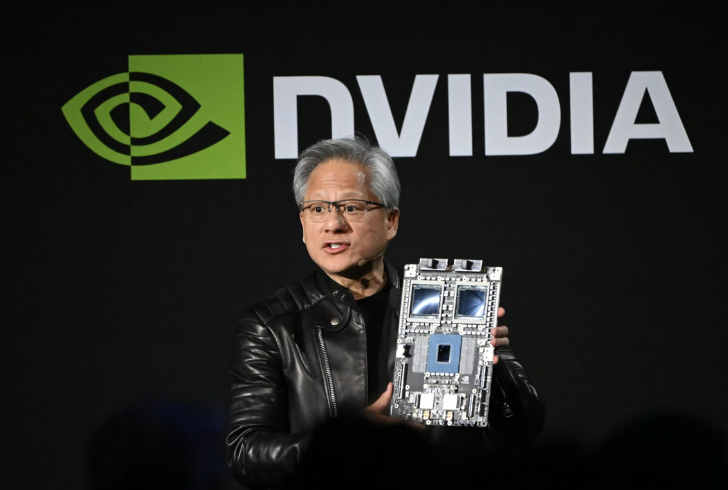
On Tuesday, Burry criticized Nvidia’s effort to help arrange more than $500 billion in AI infrastructure financing, calling it a “Wall Street stunt.” He also maintains bearish positions involving Nvidia, Micron Technology Inc. (NASDAQ: MU), Caterpillar, Palantir, Tesla Inc. (NASDAQ: TSLA), and the iShares Semiconductor ETF (NASDAQ: SOXX).
The SPDR S&P 500 ETF Trust (NYSE: SPY) was up 0.16% at $773.76 in Thursday premarket trading, while the Invesco QQQ Trust ETF (NASDAQ: QQQ) slipped 0.02% to $723.52.
What Investors Should Watch
Burry’s warning does not predict exactly when a selloff will happen. Instead, it highlights the risks of relying on leverage during long market cycles. A calm market can continue for an extended period, but investors using borrowed money may have less room to withstand a sudden reversal.
The 182-session streak has drawn attention because it is unusual by historical standards. Combined with Burry’s concerns about leverage, AI valuations, and excess investment, the signal offers investors a reason to review how much risk they are taking.
His central message remains straightforward: avoid excessive leverage and give major market cycles enough time to play out.